
INTRODUCTION.
The 06 best universe pictures ever seen by the Hubble and Spitzer Space Telescopes, has investigated the abundance of astonishing pictures caught by the Hubble Space Telescope and the Spitzer Space Telescope and gathered this rundown of our top picks. Traversing north of 30 years, these pictures take us from bright clouds to collaborating universes, from logical revelations to just awesome space scenes that take your breath away.
Table of Contents
Southern Crab Nebula.

The Hubble group delivered this picture of the hourglass-molded Southern Crab Cloud for the space telescope’s 29th commemoration, in 2019. In no way related to the Crab Cloud found in the heavenly body Taurus, the Southern Crab Cloud is the flawlessly even construction made by a lopsided parallel star framework. In that framework, one star has proactively detonated and transformed into a white midget.
Hubble Ultra Deep Field.

A portion of Hubble’s most renowned pictures are from the Hubble Ultra Profound Field, which has looked at the most far off worlds at any point noticed. This picture focuses in on a fix of the sky that contains around 10,000 systems that lie up to 10 billion light-years from Earth. Cosmologists utilize these profound space pictures to think back in time and study the universe’s beginnings and advancement.
This adaptation of the composite, delivered in 2014, is a superior form of the first one that was delivered in 2003. It integrates significantly more perceptions with additional frequencies of light. Hubble procured the information for these pictures involving its High level Camera for Reviews and Wide Field Camera 3.
Snowflake Cluster and Cone Nebula.
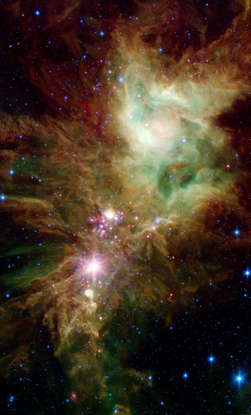
Odd shapes and surfaces can be tracked down in the neighborhood of the Cone Cloud. These examples result from the wild distress that goes with the arrangement of the open bunch of stars known as NGC 2264, the Snowflake Group. To all the more likely comprehend this cycle, a definite picture of this district was taken in two shades of infrared light by the circling Spitzer Space Telescope. NASA delivered the picture in 2008.
Veil Nebula.
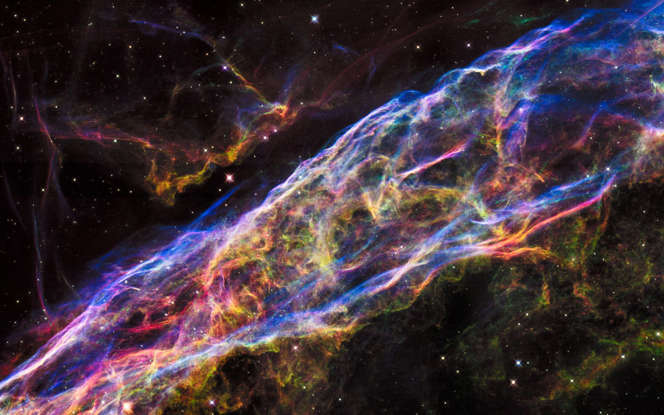
The Cover Cloud is an enormous cosmic explosion remainder found 2,100 light-years from Earth in the star grouping Cygnus. It’s likewise one of the most gigantic and splendid X-beam sources overhead and measures around 110 light-years wide. Cosmologists accept the Cover Cloud was made when a star multiple times the mass of the sun detonated something like quite a while back, and heavenly breeze from the blast gave the cloud its shape. The Hubble group delivered this picture on Sept. 24, 2015.
Stars Brewing in Cygnus X.
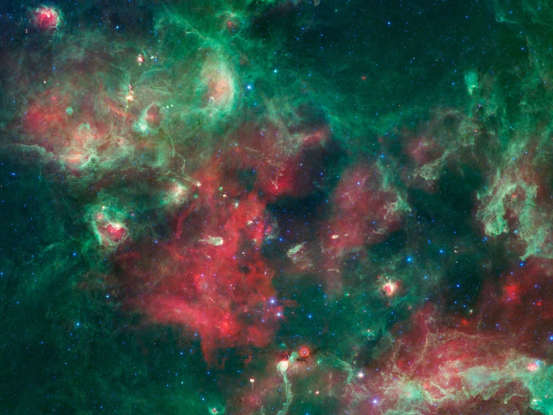
A foaming cauldron of star birth, Cygnus X, is featured in this 2012 picture from NASA’s Spitzer Space Telescope. Infrared light that we can’t see with our eyes has been variety coded, to such an extent that the most limited frequencies are displayed in blue and the longest in red. The center frequency range is green.
Butterfly Nebula.
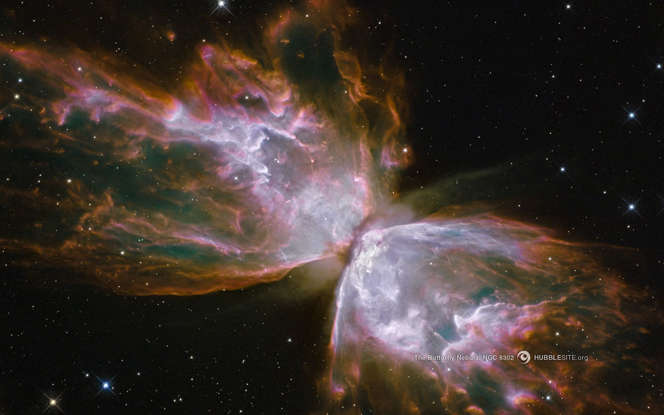
Hubble recognized the bipolar cloud NGC 6302, known as the Butterfly Cloud or Bug Cloud, shuddering through the Scorpius group of stars involving its fresh out of the box new Wide Field Camera 3 of every 2009. NASA space explorers introduced the new camera during an overhauling mission that year, and this was among the primary profound space pictures Hubble took with the new instrument.