
Introduction
Poplar tree (Populus spp.) is a deciduous tree that belongs to the genus Populus. It is native to the Northern Hemisphere and can be found in many parts of the world, including North America, Europe, and Asia. Poplar trees are known for their fast growth, as they reach maturity in just a few years.
Recently, poplar tree plantations from the Salicaceae family have become increasingly popular in India, as there is a strong demand for their timber, used for construction, furniture-making, and paper production. Not only do these trees bring utility, but also serve as a great addition to parks, gardens, and urban environments as they provide shade and a lovely aesthetic. Despite the various benefits that these tree plantations have to offer, there are some challenges related to their cultivation. In this blog, we will investigate the significance of poplar tree plantations in India, their advantages, and the issues related to their cultivation.
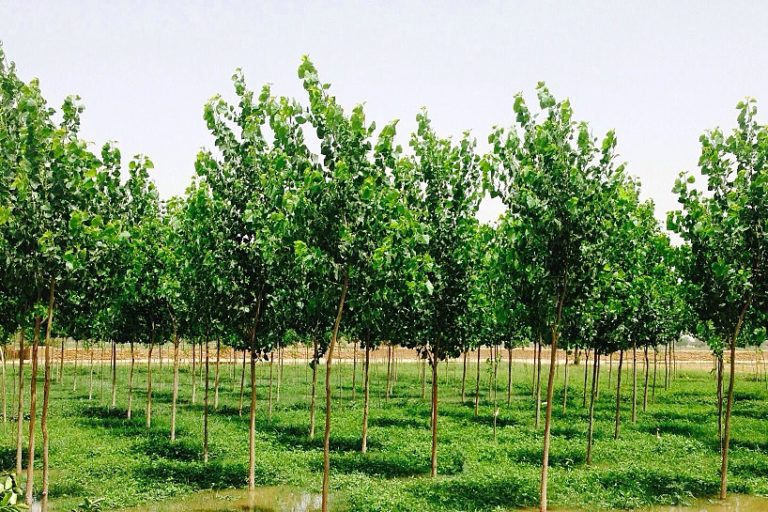
Table of Contents
Poplar tree species in India
There are three main species of poplar trees that are grown in India, including:
- Populus deltoides: Also known as the Eastern Cottonwood, it is native to North America, but it is widely cultivated in India for its timber. It is a fast-growing tree that can grow up to 40 meters tall.
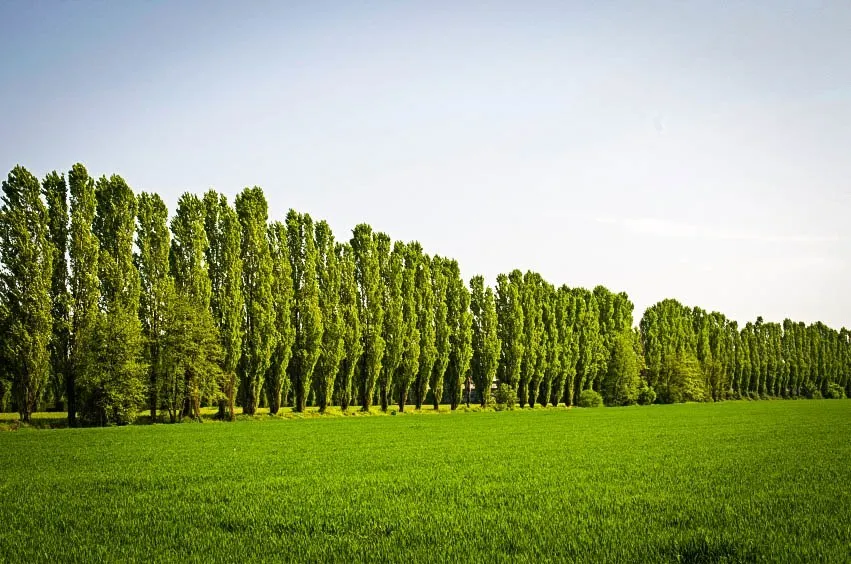
- Populus nigra: Also known as the Black Poplar, it is native to Europe, Western Asia, and North Africa. It is commonly grown in India for its ornamental value, and it is also used for timber.
- Populus hybrid: Poplar hybrids are created by crossing different poplar species. These hybrids are grown in India for their timber, as they are faster-growing and more resistant to pests and diseases than pure species.
Poplar tree plantation in India
Recently, in India, the popularity of poplar tree plantations has increased substantially due to the need for wood and to enhance reforestation. In many Indian regions, including Punjab, Haryana, Uttar Pradesh, Uttarakhand, and Himachal Pradesh, these trees are grown on a huge scale. Poplar tree plantations take up an area of around 4.5 lakh hectares, and in the foreseeable future, the demand for the wood they provide is estimated to climb.
Benefits of poplar tree plantation in India
- Timber production: Poplar trees are fast-growing and can be harvested for timber in 6-8 years, making them an ideal species for commercial timber production. Poplar timber is used in construction, furniture making, and paper production, among other industries.
- Carbon sequestration: Poplar trees are excellent at sequestering carbon from the atmosphere, making them an ideal species for afforestation. Poplar tree plantations can help mitigate climate change by reducing greenhouse gas emissions and improving air quality.
- Soil conservation: Poplar trees have a deep root system that helps to stabilize soil and prevent erosion. They are commonly grown in areas prone to soil erosion, such as hilly regions and flood-prone areas.
- Employment generation: Poplar tree plantations can generate employment opportunities in rural areas, as they require labour-intensive activities such as planting, pruning, and harvesting.
Challenges associated with poplar tree plantation in India.
- Water requirement: Poplar trees necessitate copious amounts of water, a difficulty which is compounded in regions with inadequate precipitation or limited water availability. Utilizing too much groundwater to sustain a poplar tree plantation can cause the water table to deplete, with the subsequent outcomes being disadvantageous to agriculture and the environment.
- Pests and diseases: Poplar trees are susceptible to various pests and diseases, including borers, leaf spot, and canker. These can cause significant damage to the trees and reduce their productivity.
- Soil degradation: Intensive land use is necessary for poplar tree plantations, but if managed incorrectly, it can result in soil degradation. Prolonged plantation on a single area can deplete the soil, as well as diminish its fertility.
- Social conflicts: In certain areas of India, disputes between local farmers and those wishing to create poplar tree plantations have been documented. In regions of limited space, conflicts can arise as the agriculturists fight for land utilization and the tree-planters struggle for the same property. Additionally, there have been allegations of quarrels between farmers and plantation proprietors over the appropriation of water.
- Chemical use: Pesticides and herbicides, utilized to ward off insects and weeds, can be overused and become hazardous to the environment and people’s well-being if not handled appropriately. Poplar trees, in particular, are oftentimes subject to such chemical applications.
Best practices for poplar tree plantation in India.
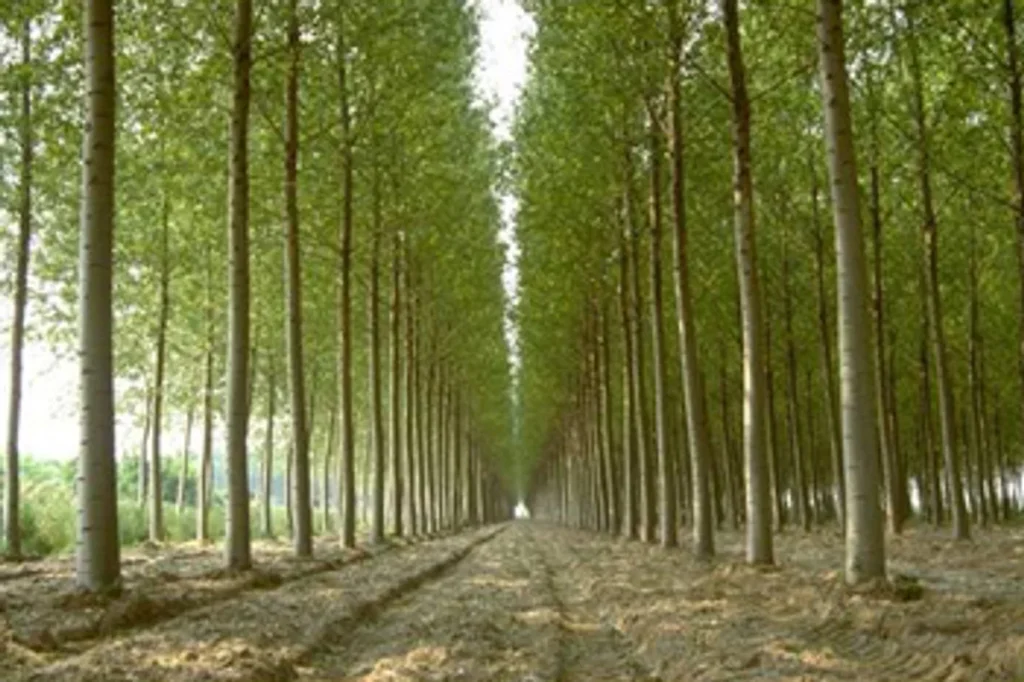
To ensure the sustainability of poplar tree plantations in India, it is important to adopt best practices in their cultivation. Some of these practices include:
- Site selection: When choosing an area to plant a Poplar tree, be sure that the environment provides an abundance of water and has suitable draining capabilities. The soil must be examined for nutrient content and alkalinity prior to planting, with modifications as necessary for optimal growth.
- Species selection: When selecting the best poplar tree species, it is essential to consider the regional climatic and soil characteristics. Hybrid varieties are generally the optimal choice as they grow at a rapid pace and have heightened immunity to diseases and pests.
- Irrigation: Poplar trees necessitate a considerable quantity of water, especially in the early years after being planted. To ensure an ample water supply, an irrigation system should be set up, with the water consumption monitored vigilantly to evade any superfluous usage.
- Pest and disease management: Regular inspection of poplar trees is recommended to prevent pests and illnesses. Taking proactive steps such as adopting an integrated pest management strategy can help minimize the use of hazardous chemicals.
- Harvesting: Poplar trees should be harvested when they reach maturity, which is typically between 6-8 years. The trees should be felled during the dormant season to minimize damage to the environment and avoid conflicts with farmers.
Conclusion.
The demand for timber has caused a rise in the popularity of poplar tree plantations in India, as these fast-growing trees provide several advantages, from timber production and carbon sequestration to employment opportunities and soil conservation. Although poplar trees bring these advantages, they are not without challenges such as requiring an abundance of water, pest and disease issues, soil degradation, and social conflict. To maintain sustainability and cultivate poplar tree plantations responsibly in India, it is important to practice the best strategies, including careful site and species selection, regular irrigation, efficient pest and disease management, and timely harvesting.
Read also: ALL ABOUT WALNUT WOOD – THE BEAUTIFUL WOOD FOR FURNITURE AND FLOORS
1 thought on “Poplar tree and Should we do Poplar tree plantation in india”