
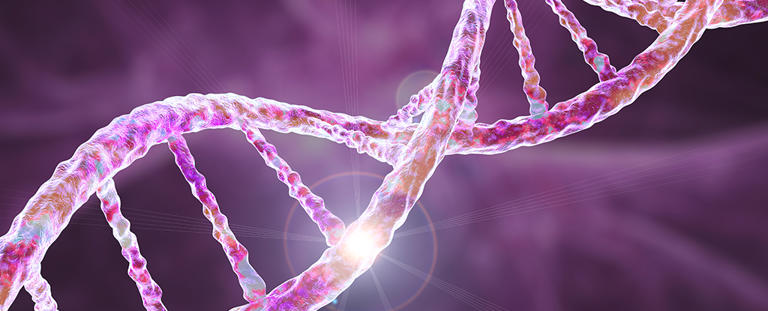
The DNA molecule, often referred to as the blueprint of life, contains the genetic information that defines and shapes every living organism on Earth. Until recently, DNA was primarily associated with the organisms from which it originated. However, advancements in scientific techniques have revealed a surprising and thought-provoking discovery: human DNA is not confined to our bodies but is present throughout the planet. This revelation has sparked both fascination and concern among researchers, leading to a burgeoning field of study. Each skin chip, hair follicle, eyelash, and spit drop cast from your body contains directions written in a substance code, one that is one of a kind to you.
As indicated by another review, innovation has progressed to the direct that it’s currently conceivable toward filter pieces of human DNA out of the air, water, or soil and unravel individual insights concerning the people who dropped them.
As helpful as this could appear, the review’s creators caution society probably won’t be ready for the outcomes.
“Any time we make a mechanical development, there are valuable things that the innovation can be utilized for and concerning things that the innovation can be utilized for,” expresses College of Florida zoologist David Duffy, who drove a venture that tried the restrictions of sequencing human DNA from the climate.
“These are issues we are attempting to raise early so strategy creators and have opportunity and energy to foster guidelines.”
Earth’s surface is cleaned in disposed of plant and creature cells and broke down microorganisms, pouring out what specialists allude to as natural or ‘e’ DNA.
By enhancing the littlest pieces of eDNA and perusing the groupings, scientists can precisely create a biological cast rundown of organic entities present in any one natural surroundings, all at rates and costs that couldn’t be accomplished by field work.
In addition, those agent hereditary examples can likewise convey bits of knowledge that no other cycle could achieve all alone, like educating specialists on the presence regarding illnesses or the connections between populaces.
This is fine and dandy when zoologists are culling tragically missing qualities from old residue, or looking for indications of a fanciful beast in Loch Ness. Yet, in that hereditary soup there will undoubtedly be strands of material left by passing people too. Furthermore, not at all like Nessie, individuals will more often than not become a little entertaining about who sneaks around on their hereditary insider facts.
While more established strategies for sequencing have battled to find significant human hereditary groupings inside eDNA tests, a cycle known as shotgun sequencing isn’t exactly so restricted, as shown by Duffy and his group in their new examination.
The exploration group took water and sand tests from close to the Whitney Lab for Marine Bioscience and Ocean Turtle Emergency clinic at the College of Florida, and from conditions along a stream in Duffy’s nation of origin of Ireland. Among the destinations they gathered examples from was a separated island and a mountain stream a long way from human residence.
Alluded to as human hereditary bycatch (HGB), a large number of the chromosomal parts they distinguished utilizing the shotgun approach contained recognizing data about their source.
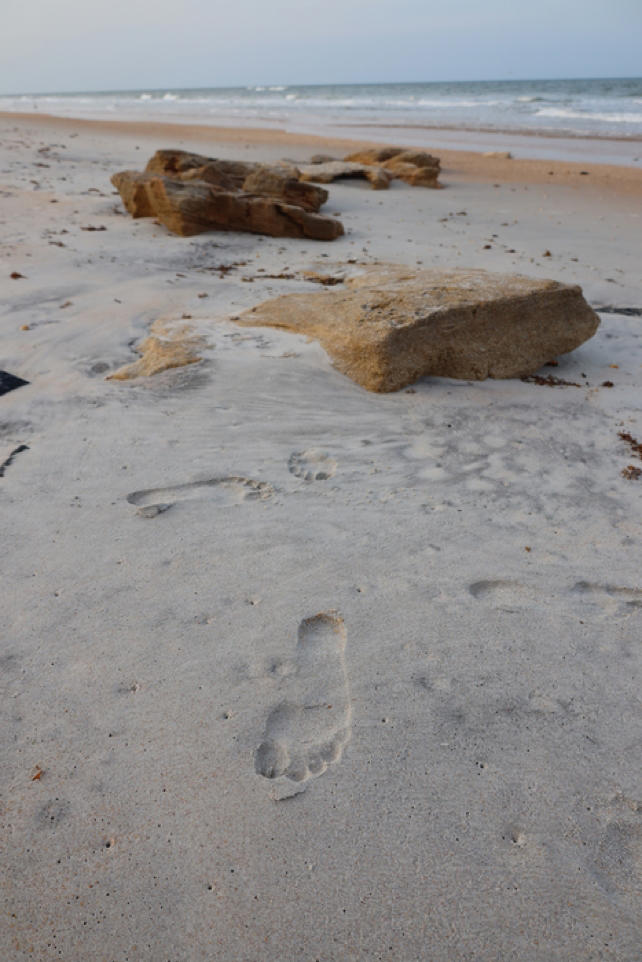
Just the island and remote stream were liberated from human DNA, in spite of the fact that hints of the exploration group’s own qualities could be removed from their impressions in the detached island’s sand.
Air tests from the college’s ocean turtle emergency clinic additionally contained eDNA that could be followed to staff, creatures, and normal creature infections. “We’ve been reliably astonished all through this undertaking at how much human DNA we find and the nature of that DNA,” says Duffy. “As a rule the quality is practically identical to in the event that you took an example from an individual.”
It’s not difficult to consider ways such exceptionally nitty gritty hereditary tests utilizing HGB may be applied in areas of the study of disease transmission or populace hereditary qualities. However the wellsprings of the recognizable DNA in this analysis all assented to be associated with the review, in accordance with the morals of distributed hereditary examination.
“It’s norm in science to make these successions freely accessible. Yet, that likewise implies in the event that you don’t screen out human data, anybody can go along and collect this data,” says Duffy. “That raises issues around assent. Do you have to get agree to take those examples? Or on the other hand foundation a few controls to eliminate human data?”
As a legal sciences instrument, the advantages are something of a multiplied edged blade, developing techniques for following people to a location of a crime.
However, considering the CSI impact, where the consequences of DNA testing is effortlessly misconstrued by a Hollywood-affected legal executive, the lawful outcomes of HGB distinguishing proof are likewise yet to be completely investigated.
There is additionally the worry of how far open observation ought to reach out for the sake of safety. “Undoubtedly, settling wrongdoing is something to be thankful for,” says Natalie Smash, a regulation master from the College of Maryland who wasn’t engaged with the review.
“In any case, taking advantage of automatically shed hereditary data for analytical points gambles with putting us all under ceaseless hereditary observation.” We could envision an authority keeping a chronicle of DNA scraps that have floated onto pretty much any crime location, one not many of us would feel happy with being a piece of.
It’s a long way from whenever society first has grappled with the moral and lawful inquiries of hereditary freedoms, obviously. However, the net gathering individual hereditary data is plainly developing, provoking us to keep asking who ought to have a definitive say over the exceptional code that depicts us as people.
The ubiquity of human DNA across the planet presents a fascinating and complex phenomenon for scientists to explore. While the presence of human DNA in various environments opens up new avenues for research, it also raises important ethical, privacy, and data interpretation challenges. Furthermore, understanding the implications of this discovery is crucial for harnessing its potential for environmental monitoring, conservation efforts, and mitigating potential risks.